


A Decade of Commitment: Sickle Cell Disease Screening in Dang District
How Creating Possibilities Nepal and UBC (University of British Columbia) Partnership Transform Lives Through Early Detection
Our Impact: By the Numbers
Since 2015, Creating Possibilities Nepal has partnered with the UBC Nepal Health Education Partnership to address a critical yet often overlooked health challenge facing the indigenous Tharu population in Dang District: Sickle Cell Disease (SCD). What began as a pioneering screening initiative has evolved into a comprehensive health education and advocacy program that has touched the lives of thousands.
Total Individuals Screened: 7,788
Sickle Cell Trait Identified: 698
Active SCD Patient: 34
Rural Municipalities: 3
Milestone Achievement: Through sustained screening efforts across Gadhawa, Rajpur, and Rapti Rural Municipalities, we have created the most comprehensive database of SCD prevalence among the Tharu population in Nepal, providing crucial evidence for policy advocacy and resource allocation.
Gender Disparity in Screening: Across all municipalities, 64% of participants are female (4,976) compared to 36% male (2,483). This reflects both the higher health-seeking behavior among women and our targeted engagement with Female Community Health Volunteers (FCHVs) and mothers' groups. However, it also highlights the need for increased male participation in screening programs.
Understanding the Challenge: Why Sickle Cell Disease Matters
Sickle Cell Disease is an inherited blood disorder where red blood cells become rigid and crescent-shaped, blocking blood flow and causing severe pain, organ damage, and life-threatening complications. For the Tharu community in Dang, SCD represents a unique health burden, with prevalence rates significantly higher than the general Nepali population.
The Tharu Community's Vulnerability
Research conducted through our partnership has estimated that approximately 9.3% of the Tharu population in Dang carries the sickle cell trait. This rate is among the highest documented in Nepal and requires sustained public health intervention. When two trait carriers have children, there is a 25% chance their child will be born with Sickle Cell Disease, making genetic counseling and early detection critical.
Persistent Challenges We Face
Health Literacy Gaps: Many community members lack basic understanding of genetic diseases, inheritance patterns, and the importance of screening, leading to delayed diagnosis and treatment.
Geographic Barriers: Rural health posts lack diagnostic equipment, requiring blood samples to be sent to distant facilities for confirmation, creating weeks-long delays.
Economic Constraints: Despite government support for diagnosed SCD patients, transportation costs, lost work days, and indirect expenses create barriers to accessing care.
Diagnostic Capacity: The absence of gel electrophoresis machines in local health facilities limits our ability to provide immediate confirmatory diagnosis, affecting treatment timelines.
Male Participation: Cultural factors and work patterns result in significantly lower male screening rates, leaving many at-risk individuals unidentified.

Our Multi-Pronged Approach: Education, Screening, and Advocacy
Community Education Initiatives
Education forms the cornerstone of our intervention strategy. We have developed culturally appropriate educational materials in the local language that explain SCD causes, symptoms, inheritance patterns, and treatment options at a level accessible to the community.
Forum Theatre Programs: We collaborate with CP Nepal staff to organize "forum theatres"—interactive educational plays performed in public spaces where up to 200 community members gather to watch families navigate the screening, diagnosis, and treatment journey. This approach has proven highly effective in rural contexts where traditional entertainment and education merge.
Training Female Community Health Volunteers: FCHVs serve as the frontline health educators in rural Nepal. By teaching these trusted community members, we create sustainable channels for ongoing SCD education and awareness.
School-Based Education: Reaching young people with accurate information about genetic diseases ensures the next generation makes informed decisions about their health and family planning.
Annual Mass Screening Camps
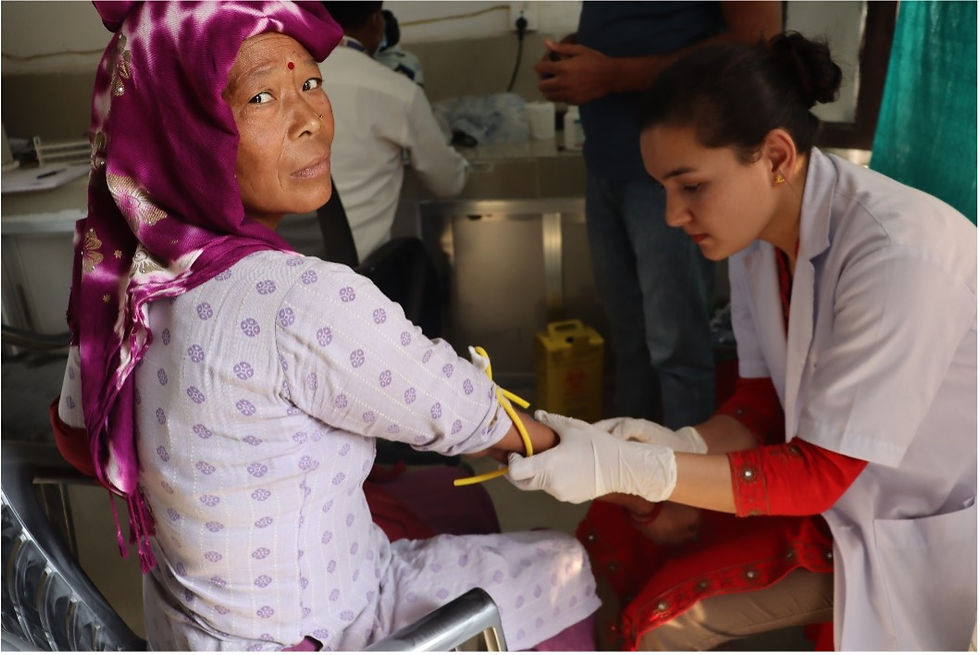
Each year, we organize screening events at local health posts across the three rural municipalities. In 2023 alone, 242 individuals were screened at Sishaniya Health Post using solubility tests, with 18 testing positive for sickle cell trait or disease and having samples sent for confirmatory HB electrophoresis.
Healthcare System Strengthening
Beyond individual screening, we work to strengthen the local healthcare infrastructure. Key priorities identified include acquiring gel electrophoresis machines for local diagnostic capacity, training healthcare workers in SCD management, and developing referral pathways for complex cases.
The Broader Health Context: Integrating SCD with Sexual and Reproductive Health
In 2024-2025, the Nepal Sickle Cell Disease Project merged with the Nepal Sexual and Reproductive Health Project to form the Nepal Health Education Partnership Project. This integration recognizes the interconnected nature of genetic counseling, family planning, and maternal-child health.
When individuals understand their SCD status before having children, they can make informed reproductive choices. Pregnant women who carry the trait can receive appropriate prenatal counseling and prepare for potential newborn screening. This holistic approach addresses health across the lifespan, from preconception through adulthood.
Universal Newborn Screening Advocacy: One of our long-term goals is lobbying the Nepali government to implement universal newborn screening for SCD. Early diagnosis enables prompt treatment, reducing complications and mortality. Our comprehensive data from Dang District provides the evidence base needed for such policy changes.
Looking Forward: Sustainability and Scale
Ten years into this partnership, we remain committed to ensuring the program's long-term sustainability and eventual government ownership. Our vision includes:
Government Integration: Transitioning screening programs from NGO-led camps to routine health post services
Policy Advocacy: Using our evidence base to advocate for universal newborn screening and improved SCD care standards
Diagnostic Infrastructure: Securing funding for gel electrophoresis machines and training technicians in their use
Pain Management Programs: Expanding beyond screening to comprehensive care, including pain education and management for those living with SCD
Community Ownership: Empowering local health committees and FCHVs to sustain education efforts independently
The journey from screening 12 individuals in 2015 to nearly 8,000 today reflects more than numbers—it represents thousands of conversations, hundreds of training sessions, and countless hours of collaboration between UBC students, CP Nepal staff, local health workers, and the Tharu community itself.
What Success Looks Like
Success is a mother understanding why her child needs screening. It's a teenager learning about inheritance patterns before starting a family. It's a healthcare worker confidently explaining SCD to worried parents. It's a government official reviewing our data to inform policy. It's every individual screened, every trait carrier identified, and every SCD patient connected to care.
Join Our Mission
Creating Possibilities Nepal continues to partner with communities in Dang District to address health inequities and improve access to life-saving information and care. The Sickle Cell Disease screening program represents just one aspect of our broader commitment to health education, women's empowerment, and sustainable development.
Whether you're a potential partner, volunteer, donor, or community member, there are many ways to support this vital work. Together, we can ensure that no child in Dang suffers from undiagnosed Sickle Cell Disease, and every family has the knowledge they need to make informed health decisions.
"Health equity isn't just about treating disease—it's about ensuring everyone has the knowledge, resources, and support to live their healthiest life."


Comments